Archive Post
Video Conferencing in Education is the next thing in telecommuting world
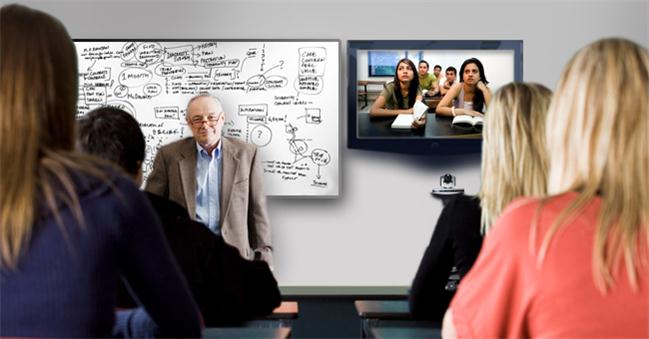
Virtual Learning Environments seem like the perfect blend of efficiency and practicality for a generation accustomed to speaking over video call, learning via the internet, and expanding their lives beyond their locations–and who might well be headed for a partly or entirely telecommuting job. Attending a college lecture in the digital world involves the same process of information exchange as talking to a friend via Smartphone. Maybe it should become just as flexible.
In fact, if your college is willing to explore the flexibility video conferencing can provide, you can choose to attend class in person or from the refuge of your home as each day presents itself. Washed out from an all-night study session, sit in on that morning lecture from home. Wake up refreshed and replenished, take the walk down to class in person.
The modern office is rapidly changing into a flexible workplace where employees are free to put in their hours from whichever location best suits their professional and personal lives. So, it stands to reason that college campuses are starting to put more resources into education through video conferencing.
The wide availability of video calling devices and platforms means students, young and old, shouldn’t have to exclusively attend classes in person. In fact, it may soon become essential that educational centers provide video conferencing options, because the coming Generation Z is the most technologically savvy bunch of students any professor ever encountered.
Shifting Between Education Realities
Students attending Lake Michigan College’s Virtual Learning Environment already have this choice between attending class in person or via video conferencing. They can switch between the two as the weather, work schedules, personal commitments, or just a flat tire dictate. Well, it’s not quite as efficient as that, since students at the community college still have to sign up for digital delivery, set up the necessary connection, and maintain something of a regular routine. The program, which was first delivered as a pilot back in 2015, is certainly a step in the right direction, a good example of a coming wave of Virtual Learning Environments (VLE for short).
Like all good VLEs, the Lake Michigan system uses the two-way nature of video conferencing to allow students and professors to see each other in person, speak to each other, and share their faces and computer screens with the entire class. From a webcam on their computer–and HD cameras have become an affordable industry standard in recent years–they can be heard as clearly from home, at work, or during their professional lunch break as they can in the lecture hall. The business world got there first, but at least some colleges are catching up.
Video Conferencing for Flexible Offices
Around 3.9 million Americans currently work from home at least half the time, an increase of more than 110% over the past decade. That growth is made possible by advances in video conferencing that have made it easier and cheaper to use, but it also reflects a change in culture. By working from home half the time, those telecommuting employees are, logic suggests, also coming into the office 2-3 days a week. That means companies have to accommodate these workers with a whole new vocabulary of equipment. This translates to the hot desks we mentioned earlier, which are unassigned desks shared between employees, as well as huddle rooms, small versatile rooms set up for quick, on-the-fly video conferencing, usually with offsite colleagues. More frequent telecommuting has also meant reassessing the qualities of good management, but these sometimes-in, sometimes-out employees have proven to be happier, more productive, and less likely to quit.
Would these benefits transfer to students given the opportunity to learn via remote, two-way communication? If major American corporations, such as Microsoft, Qualcomm, and Cisco, are able to adapt to the demands of a technologically-empowered workforce, then surely major educational institutes can do likewise to support students–especially when those students represent the most digitally advanced generation yet.
Educating through Video Conferencing for Generation Z
Generation Zers were born between 1995 and 2010, meaning the oldest members make up the majority of current college students. The group makes up a quarter of the U.S. population, and has been using computers since elementary school, smartphones since high school, and social media since they developed social skills (or since their parents gave the OK).
The Facebook they grew up with, and are starting to tire of, is a good example of how digital these young lives have become. The social media giant’s recent move into office collaboration with Workplace by Facebook, and its pioneering work in e-commerce, means it now has an interest in how you work, play, shop, dine, communicate, get your news, and more.
That seems to be how Gen Z works, too. So aren’t these students going to be drawn to educational facilities that can fit into that digital way of being? Doesn’t it stand to reason that they’ll want to slip between the digital and “real” worlds for their education, the same way they do in their social life?
Virtual Learning Environments seem like the perfect blend of efficiency and practicality for a generation accustomed to speaking over video call, learning via the internet, and expanding their lives beyond their locations–and who might well be headed for a partly or entirely telecommuting job. Attending a college lecture in the digital world involves the same process of information exchange as talking to a friend via smartphone. Maybe it should become just as flexible.
Source:www.vcdaily.com
A Complete Guide for selecting Industry specific Communications Solutions

What is communication? Let’s look at the importance of regular and proper interaction amongst the internal workers in an organisation. Since the time, humans were labelled as storytellers; people know that internal communication spells success for any industry. It is apparent that from writing letters to sending text messages; the tools and meaning of communication have received tremendous modifications. While talking about the communication devices, technology has developed from Analog to VoIP. The shifts have also changed the way entrepreneurs have to channelize budgets for investing in communication solutions.
Increasing utilization of VoIP technology has improved access to different communicating modes. By installing in an EPABX, enterprises can consolidate these and help employees minimize the struggle of working through multiple channels. Besides this, there are many facilities that any communication solution is designed to deliver.
Each feature has different application in every industry. Therefore, businesses have to be careful when looking for an office telephone system.
- Real Estate: The developers have to offer impeccable services to their clients for building a loyal customer base in this era of fierce competition. They have to get personally involved in all the aspects of property whether it is selecting the construction venue or deciding interiors of houses. They have different tasks to handle and at the same time they have to remain constantly connected with their customers as well. For smooth management of all the activities, realtors should invest in a hybrid communication solution that offers mobility and access to different trunks. The real estate developers can use the communication solution to send text as well as picture messages for promoting their properties and amenities amongst hopeful clients.
- Travel and Tourism: Since the demand of travelers keep on changing with time, agents need to keep themselves updated regarding the trends. They need to remain constantly connected with each other for discussing ways to offer enhanced experience to their clients. Tourists carry good reputation of the agency if they get to talk with the same agent every time. The agency owners can eliminate customers’ need of repeating their requirements by investing in EPABX telephone system that routes the call on basis of previous interactions. By using sequential ringing and group ringing feature of the PBX, the authorities can weave an improvised experience for their clients. Purchasing a PABX with a recording capability can help the authorities keep a track of the conversations and ensure quality of offered services.
- Hospitality: Hospitality is one of the most dynamic industries services are constantly evaluated on parameters of promptness and precision. To rest assured that the guests are served well, authorities need to build different departments which can take care of different aspects. The receptionists have to manage multiple tasks along with handling and transferring numerous calls to desired extensions. The hotel is also judged on its aesthetic value therefore, hoteliers need to invest in a solution that offers wireless connectivity between rooms and departments and consumes minimal space.
- Retail: Like hospitality, there are different departments in retail center where internal communication plays a critical role in ensuring proper supply chain management. The employees have to remain on move for promotion of their products and services. For retailers with branches across the globe, uninterrupted flow of information between offices and headquarter is important. To fulfill all the needs, authorities can invest in EPABX telephony system which brings different premises on the same IP network and is equipped with redundant power supply and processing units.
source: siliconindia.com