Archive Post
Project SENDATE to make secure and efficient networks for the Internet of the future
 University of Würzburg’s Institute of Computer Science is working to make secure and efficient networks for the internet of the future. Two of its projects received nearly EUR 750,000 worth of funding. Large data centres are the major checkpoints of the Internet. They save, process and forward business data and private information. Today’s data centres have huge computing and storage capacities and are usually located in remote places far away from their customers. Already today, these data centres have a lot to cope with and the end is not in sight. They have to serve an increasing number of smart phones, tablet computers and other terminal devices causing the associated Internet traffic to grow continuously. New Internet apps in the environment of industrial and health systems for example contribute to this trend.
The project aims to bring data centres closer to users. For data centres to operate in a secure, flexible and reliable manner, Telecommunications and IT will have to be consolidated. It also focuses on decentralizing the computing and storage capacities. A new research consortium SENDATE (Secure Networking for a Data center cloud in Europe) is seeking to develop network architecture and technologies for secure and flexible distributed data centres. Innovative approaches such as Network Functions Virtualization (NFV) in combination with Software Defined Networking (SDN) are the basis for a secure, flexible, low latency, and locality-aware distributed data centre approach to support the upcoming application scenarios. The project is managed by Nokia Solutions and Networks GmbH & Co. KG. Set to run until February 2019, it is financed by various research sponsors within the scope of the Celtic-Plus IKT research cluster. The SENDATE-PLANETS subproject involves a JMU research team from the Department of Communication Networks which develops security mechanisms for NFV/SDN networks. The scientists also investigate the development, operation and optimization of virtual network functions and their positioning in distributed data centres.
Software Defined Networking (SDN) enables implementing flexible, virtualized and programmable networks in the Internet of the future. To study the possibilities and performance of network management using SDN, department also collaborates with InfoSim GmbH & Co. KG in the SDN-Perf project (Performance of SDN). The medium-sized company located in Würzburg has specialized in developing network management software.
Source : http://phys.org/
VOIP services can change your perception to do business
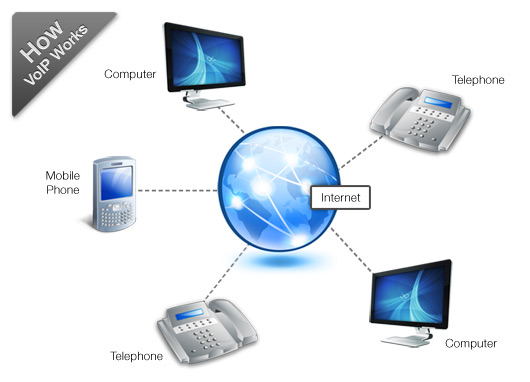
It might be all over the news these days but VoIP (Voice over Internet Protocol) has been around a little longer than most people think. However, it’s only in the last few years we have seen an explosion in VoIP use by the general population, thanks to steady technological improvement that has lowered the barriers to entry. Like other business IT tools that came before, VoIP has now transcended that initial stage, to now stand on the verge of changing how businesses – of all sizes – work and collaborate. In fact, business phone systems that integrate VOIP and standard calling have become economically viable for even small and medium-sized businesses, and we can expect this tech to spread faster than ever.
VoIP in India
Today, VoIP’s status as one of the rising stars in communications tech, fueled by a steady uptake in adoption by small and medium sized businesses, is borne out by market research. In 2013, the India VoIP Market Forecast & Opportunities report predicted a 27% annual rise over the following five years. According to the report, the credit for this mainly goes to better 3G / LTE and broadband coverage. Other factors to the growth of VoIP include government initiatives, higher purchasing power, and the growth in affordable 3G-enabled mobile devices.
According to a report by the Internet and Mobile Association of India (IAMAI) and IMRB International, mobile Internet usage has shot up from 238 million users in June 2015, to 206 million by the end of the year. As mobile Internet usage was expected to grow by over 55 percent (to touch 371 million by June 2016), we can expect greater use of VoIP systems, platforms and applications – on both the enterprise and consumer fronts.
What VOIP could bring to SMB and Enterprise businesses
As seen across the world, the prospect of taking calls anywhere, and anytime, without being restricted to a device or being hampered by the need for expensive infrastructure not only boosts productivity, but drives more businesses to consider VoIP as their primary communications tool. But so far, this flexibility has been missing in the Indian market as customers are restricted to using expensive on-premises setups – which keeps the advantages of VoIP also restricted to enterprise customers with deep pockets.
VoIP has already made great strides in India, but the progress hasn’t been as fast as one would have expected. Considering our huge smartphone user base and availability of bandwidth even in Tier II and III cities, we can easily visualise the potential for VOIP usage in India. In fact, VoIP is already used a lot, especially by the consumer market – Skype, Viber, Facetime, WhatsApp are all consumer VoIP applications.
VoIP can change how you do business
From improved collaboration between teams to more efficient customer support, VoIP works as a transparent medium where the message finally gets the importance it deserves – without getting caught up in issues relating to access and networks.
Imagine no-fuss, easy conference calls with your colleagues across the world, or connecting to popular VoIP services via your fixed line phone (or vice versa), or even the prospect of allowing your sales and support staff to be available for calls wherever they are – without needing specialised telecom infrastructure – and the future may well lead to one packed with rich interactions that will result in more efficient project management, faster closure of leads, quicker resolution of support issues, improved CSAT, and of course, happy employees who are not bound by office boundaries but are focused on solving problems from anywhere!
And these benefits won’t just be restricted to large enterprises. VoIP’s inherent nature enables even startups and SMBs to take advantage of VoIP’s true capabilities, allowing them to compete in their markets on a level playing field
– Connect from anywhere as location independence becomes a reality
– Connect from any device, whether mobile, web or conventional phones
– Far more affordable than fixed line operators
– Redundant networks improve reliability
– Geographical barriers vanish
VoIP is the future of telecommunications, whether we talk about the consumer market or the enterprise. In fact, if we are to judge it on the basis of how it enriches human-to-human bonds and how it enables better collaboration, it may very well bring about the biggest change in the Indian unified communication industry.
Source: www.cxotoday.com
Tarang Sanchar enters final lap and is due for official launch soon

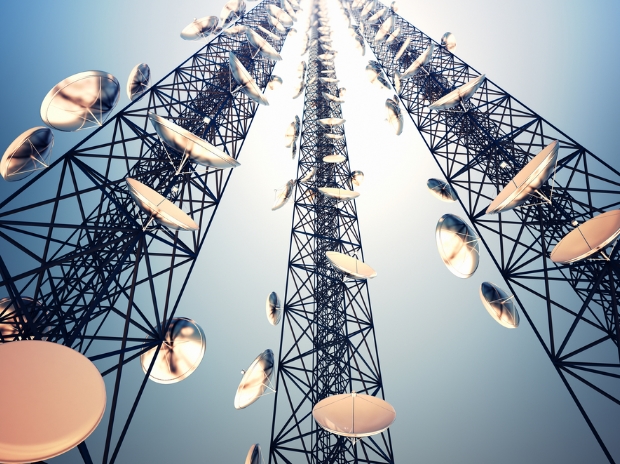
Telecom Department’s portal Tarang Sanchar will be soon be active. It will give clarity to users at best. What exactly can users expect? It will let users check radiation compliance status of towers across the country and get a specific one tested by DoT on request and for a fee. It has entered the final phase and is due for official launch soon. The portal, which has been populated with data from 12.5 lakh base transceiver stations (BTS), will enable users to view tower-specific details such as the operator, the supporting technology (2G/3G/4G) and most importantly, if it meets electro-magnetic frequency (EMF) compliance norms.
The portal has been set up in close co-ordination with the industry. In case a subscriber wants to get a particular BTS tested by DoT to assess its EMF compliance level, the same can be done by putting in a specific request. There are two ways of testing. One is free testing and the other is a paid testing version. If the prescribed ceiling in a particular service area for testing of BTS has already been reached, the user can get the same tested by payment of a fee, most likely to be pegged at Rs 4,000. The fee is predicated on the fact that the testing process is elaborate, takes a few hours and involves technical capacity and manpower. The tower-specific data have been collated from all service providers and that the portal also represents a “green initiative” as the entire data will now flow from operators to the Telecom Department electronically. This may make things easier and compatible between service operators and Telecom Department.
Licensee is required to submit to the Term Cell an EMF self-certification for every BTS and the same is required even when there is any change with regard to any tower such as orientation or change in height etc. The portal will make the entire process online using digital signature and showcase Digital India and paperless activity. It promotes how India is taking steps toward a developed nation.
Source: Economictimes.Indiatimes.com
Chinese Long March 3B launches first mobile Telecom Satellite
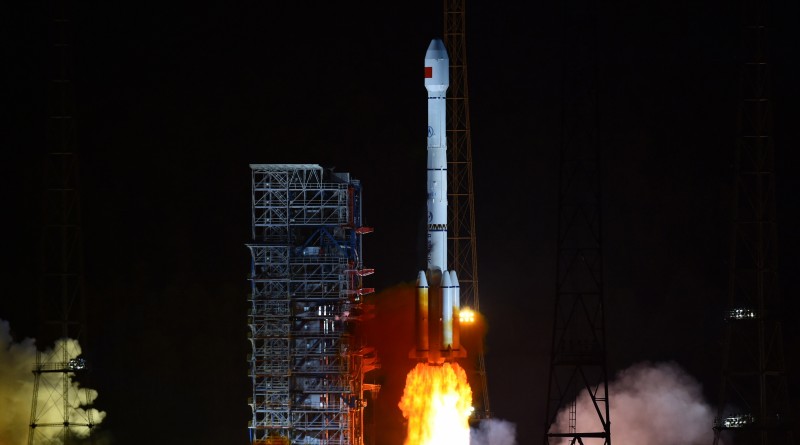
China successfully launched the first satellite for mobile telecommunication named Tiantong-01 satellite. Launched at 00:22 am local time on 6th August at south-western China’s Xichang Satellite Launch Centre with the Long March-3B carrier rocket, it is surely going to bring a revolution in telecom industry.
Tiantong-01 was designed by China Academy of Space Technology and its ground service will be operated by China Telecom. The Long March-3B carrier rocket was produced by China Academy of Launch Vehicle Technology. It was the 232nd flight of the Long March series carrier rockets, and the 36th launch of the Long March-3B. The three-stage Long March 3B rocket is currently the most powerful Chinese booster in service. Tiantong-01 will establish a mobile network with ground facilities, providing services for China, the Middle East, Africa and other areas. It is the first satellite of China’s home-made satellite mobile telecom system, and a key part of the country’s space information infrastructure. More geostationary satellites will be sent into orbit for the system. Development of the project began following a devastating 8.0 magnitude earthquake in Wenchuan in 2008, as part of efforts to ensure communications networks remain operational when disaster strikes. The project is also aimed at providing services in hard to reach areas such as oil rigs, mountains and deep forests.
The country is also preparing for the next round of its manned space mission. They also plan to carry a second module for the space mission replacing Tiangong 1 and a staffed spacecraft called Shenzou-11. China sent its first astronaut into space in 2003, and since then has taken huge advancements. According to a report, more satellites will be added to the communications network in future as demand grows.
USSD message based mobile banking to be reviewed by TRAI as tariff seems unreasonable
The Telecom Regulatory Authority of India (Trai) has come out with a consultation paper to identify and address issues related to poor uptake of unstructured supplementary service data (USSD) based mobile banking services in the country. The Unstructured Supplementary Service Data or USSD messages are those messages which are widely used to inform pre-paid consumers about deduction of balance after each call or SMS they make or send. These messages cannot be stored in mobile phone. Using short codes on USSD platform like *121#, people are able to check their balance and subscribe to telecom services. In case of mobile banking such codes allow account holders to access different services like checking bank balance, fund transfer etc. At present, Trai’s rule cap USSD rate at Rs 1.5 per session. The regulator has received requests from various authorities involved in banking services to reduce the rate of USSD session.
The USSD-based mobile banking has not gained traction in the country. According to Trai, expansion of banking and reach of financial services were vital for the long-term sustainable development of any country. From the standpoint of equity, financial services need to be provided at an affordable cost to those who are currently excluded from the formal financial system.
Trai said mobile telephony could be the answer to the problems related to last-mile service delivery of financial services. With close to 225 million Jan Dhaan accounts, around one billion Aadhaar cards, and one billion mobile connections in the country (450 million in rural areas), it was expected the USSD-based mobile banking service would gain popularity among the unbanked and under-banked population. It further said that in May 2016, only 3.7 million mobile banking transaction attempts reached the National Payments Corporation of India platform.
Clearly, the present tariff per USSD session for mobile banking offered by telecom service providers is several times higher than the average tariff for a Minute of outgoing voice call, or an outgoing SMS, or an MB of data transfer. The telecom operators have opposed lowering of tariff. Trai, in the paper, has sought opinion on various issues including method for prescribing the tariff and whether the present pricing model for USSD-based mobile banking in which consumers pay for the use of USSD should continue.
source:www.business-standard.com,timesofindia.indiatimes.com
Why is there still a tele-density divide across India?

ASSOCHAM, or The Associated Chambers of Commerce and Industry of India, has released data from a study conducted on the tele-density distribution among the states of India. Tele-density refers to the number of individuals presently using a cellphone or a connected device, among every 100 individuals. An important study in light of the recent influx of affordable mobile devices and the advent of 4G network states that while states like New Delhi stands at a tele-density figure of 238, other states like Bihar, Assam, Madhya Pradesh, Uttar Pradesh and Odisha all have tele-density figures of below 70, hence stating that despite the recent telecom boom, India as a nation is far from being entirely well-connected.
In face of the states with prospering tele-density, Bihar has a tele-density figure of 54.25, Assam has 55.76, Madhya Pradesh has 62.33 and Uttar Pradesh has 62.74. Among other states that have tele-density below 70 is Odisha, too. However there is a visible Digital Divide between states with some of the eastern states not finding support from service providers. There could be many reasons like lack of infrastructure or difficult land mass or indifference in terms of business opportunities.
The recent times have seen a rise in the telecommunications sector. The Government of India has given a major push towards technologically advancing India, with movements like Make in India and Digital India drawing a number of big names to the country. One of the notable participants of the Digital India programme is Intel, who is providing groups of technology innovators a space to bring connectivity and technology to rural areas. Home-grown technology is also a major focus in recent times, with Make in India seeing Moto, Xiaomi and manufacturer Foxconn set up assemmbly units across India.
India is not well connected yet and a considerable digital divide is still hindering growth. 4G network spectrum is also taking flight, with Airtel’s 4G services already existent for over two years. Vodafone is rolling out its own service, and Relaince Jio has unveiled 4G for its employees already, at the end of 2015. Other network services to aid India’s connectivity scenario include Google’s Railware service to bring public WiFi hotspots to railway stations, BSNL’s plan to set up 40,000 public WiFi hotspots to connect remote areas, and technology companies like Lukup Technologies coming up with Lightup, a light-powered network transmitter and receiver that acts as a wireless network provider to areas where laying fiber lines is difficult, both logistically and economically. Google’s Project Loon is also scheduled to arrive in India, after having been given the green signal. ASSOCHAM’s study highlights a key point of concern for India, and highlights the need to further spread the network to deeper corners of the nation, which remain out of the connected environment to date. Technological awareness is also a key area, which can go hand-in-hand with better infrastructure.
Source: http://www.digit.in/