Archive Post
The entry level Smartphone segment to rise high at 44% in 2016

2016 hasn’t been a good year for smartphone OEMs around the world. However, for India, who has recently acquired the second spot in the list of the world’s largest smartphone market, it seems that the smartphone juggernaut remains impossible to stop. Posting in at a healthy growth at 23% YOY, a recent report shows that the growth potential in the budget smartphone market in India is not only intact but alive and kicking as well ! India, home to over 1.2 billion people, has smartphones in the hands of less than one-fourth of a billion of its people.
According to the research firm, smartphone shipment in the country is expected to grow to about 130 million handsets this year from 97 million last year by 163 brands. The under Rs 10,000-smartphone segment is expected to grow 44 per cent this year, constituting 70 per cent of the market. The entry-level or sub-Rs 10,000 accounted for 75 per cent of the market in calendar year 2015 with 153 brands shipping in the price bracket. For 2016, the segment is forecast to constitute about 70 per cent of the estimated 130 million shipment (91 million). The mid-tier segment (Rs 10,000-20,000 bracket) is expected to remain flat compared to the de-growth in previous year and account for 13 per cent of the market. The report said the mid-segment accounted for 18 per cent of the Indian market last year with 46 brands shipping in the price bracket. The high-end category (devices priced Rs 20,000 onwards) occupied 7 per cent of the market in 2015 with products from 19 brands. It is expected to grow at 19 per cent in 2016 compared to 15 per cent in previous year. This segment is expected to gain significance as smartphone upgrade becomes main driver of growth for overall market. The premium devices are forecast to account for 6 per cent of the market or about 7.8 million units in 2016.
Smartphones have caught the Indian market by storm and in Q1 2016, more than 45% of all mobile phones shipped were smartphones. While that by itself is a staggering number, two out of every three smartphones shipped during this quarter have been LTE Capable devices. Keeping in pace with the demand for faster Internet connectivity, there has been the growing demand for phones with larger screens by the audience to feast their eyes on. We take a more in-depth look at smartphones and how they’ve been shaping up in the Indian scenario in our next segment.
Source: www.financialexpress.com, www.indianexpress.com
US FCC aims to make 5G wireless networks a reality

Not long before 5G will be the new ‘it’ technology. Just as most Indian smartphone users and a small percentage of the elite are getting used to 3G and 4G speeds respectively, media reports suggest that this technology is redundant, out-of-market, junk, a technology that’s turning obsolete. While discussions around 5G have been making waves for some years now, this week’s proposal by the US Federal Communications Commission (FCC) to kick-off 5G Wireless proceedings, seems to indicate that the future is nearer that it had appeared earlier. If FCC approves the technology then the United States will be the first country in the world to open up high-band spectrum for 5G networks and applications.
5G technology should be like mobile fiber offering speeds 10 to 100 times faster than what’s available in today’s spectrum. Some activity has already begun around the project with Verizon conducting 5G tests in the United States and AT&T intending to follow suit later. Google and Samsung had also reported some work related to 5G technologies, both from a hardware as well as software point of view. The proposal would also open up a large amount of high-speed unlicensed spectrum. Whereas most of the new 5G spectrum will be leased out to wealthy companies, this unlicensed area will be open to use by anyone.
A major concern is that 5G would not travel far and cannot penetrate buildings. The solution could be extensive tower deployment, something that is already raising the hackles of environmental groups. There is also the problem of developing new technologies that allows mobile devices to track down 5G signals in a manner vastly different from the way traditional wireless has worked through blanketing an area. Phones and other devices may need to get smarter to catch signals that are aimed and steered.
So, when would all of this result in fruition? Opinion is diametrically divided amongst the current service providers who believe 5G could become reality within the next 12 to 18 months. That’s all still a few years out, at the earliest. But actions by the FCC signal that it’s moving toward reality. The commission will vote on the proposal at a meeting next month. If it passes then the commission will then move toward opening up spectrum. That process, which will be called the Spectrum Frontiers proceeding, could also take several years. But FCC Chairman notes that the first 5G deployments are expected to be ready for 2020.
Source:www.theverge.com, www.techtree.com
Nasscom aims to make India a force in big data, analytics by 2025

The term “analytics” has been used by many Business Intelligence (BI) software vendors as a buzzword to describe quite different functions. Data analytics is used to describe everything from online analytical processing (OLAP) to CRM in call centres. Banks and credit cards companies, for instance, analyze withdrawal and spending patterns to prevent fraud or identity theft. Ecommerce companies examine Web site traffic or navigation patterns to determine which customers are more or less likely to buy a product or service based upon prior purchases or viewing trends .It is used to determine whether the systems in place effectively protect data, operate efficiently and succeed in accomplishing an organization’s overall goals.
India is currently among top 10 big data analytics markets in the world. Nasscom (the National Association of Software and Services Companies) has set a target of making India one among the top three markets in next three years. Big data analytics sector in India is expected to witness eight-fold growth to reach $16 billion by 2025 from the current level of $2 billion. Nasscom was partnering with its members to build a multi-pronged approach that encompasses skill development, thought leadership, products and platforms to realise the vision.
In order to build a supported ecosystem, the association has launched an online community for all the stakeholders in the analytics space. The online community will help stakeholders discuss the issues, challenges and opportunities to grow the industry. About 20 analytics firms are going to meet under the aegis of Nasscom and discuss the professional proficiencies that they require. They are to come out with a set of recommendations on the kind of skill sets they will require.
According to Nasscom, there are about 600 analytics firms in the country, out of which 400 are start-ups. About 100 companies were added during 2015. There is approximately $700 million worth of start-up funding over the last two-and-half years. The big data and analytics industry is witnessing a rapid growth driven by increased demand for cloud based and predictive analytics solutions by industries such as BFSI, retail, telecom and healthcare. Hyderabad has emerged as a strong contender for the establishment of a Centre of Excellence for Big Data and Analytics. Nasscom hopes that an announcement will soon be made on the Centre of Excellence. The centre’s mandate will be to drive research in the analytics space and strengthen the ecosystem. Artificial intelligence and deep learning algorithms have advanced rapidly to enable the development of machines that can now do tasks that require deep expertise and skills
Redefining infrastructure with software virtualisation

Together, software-defined networking (SDN) and network function virtualisation (NFV) have become the most highly-anticipated developments in network infrastructure in over a decade. A software abstraction layer sitting above a set of virtualized hardware resources can transform the way service providers (SPs) do business – improving service velocity, lowering costs and drastically increasing business agility. Effectively, NFV and SDN can reduce the time needed to deploy and augment networks from months down to days.
The value of this has certainly not been lost on the wider market. IDC has reported that the global SDN market will see compound annual growth of 53.9% between 2014 and 2020, estimating it at nearly $12.5 billion. IHS has similar expectations – predicting that the global network functions virtualisation (NFV) hardware, software and services market will reach $11.6 billion by 2019. The mass migration of enterprise IT to the cloud, along with associated data, applications, compute and storage resources have all contributed to this rapid growth. And the upsurge in end-user and consumer demand for data intensive applications and cloud-based services has compounded it.
Both SDN and NFV are powerful technologies with the capability to transform networks; however, the transition needs to be done with the customer, in this case enterprises, in mind. Enterprises require hybrid IT infrastructures that offer choice and ensure the desired level of performance at the right cost. They also want to be able to order and activate it via self-service digital interfaces when and where they need it. This means SPs should be focussing on transitioning to SDN / NFV solutions that enable this hybrid IT infrastructure, by enabling a programmable, on-demand packet-optical based network to a wide variety of private and public data centres and cloud providers. Virtual networking services can then be added on top of these new hybrid IT infrastructures as an easier way to deliver managed network services (from managed firewalls and managed routing to managed WAN optimisation, and so on). Virtualisation means these services can now be conveniently deployed, at the right price, with flexible terms; opening them up to small and medium enterprises—currently a largely untapped market.
SPs are already enabling hybrid IT infrastructures where SDN can add value, building out for specific deployments and replacing legacy components with new technologies as networks are upgraded, but this will take time. Luckily, there are plenty of opportunities to look to for.
The vendor community, however, is already taking steps in the right direction, and in so doing reducing what could be a complex, time-consuming integration process through a DevOps style approach. This allows for the rapid creation of service templates and enables SPs the choice of adding new services and features themselves, or utilising third-party vendors and/or solution integrators as required. Ultimately multivendor communities will ensure that the resources that enable network, data centre and virtual domains to be connected will be more accessible.
For SPs in particular, moving from closed, proprietary hardware-based architectures to more open, on-demand software-driven networks has become mission critical. Programmable infrastructures that can rapidly adapt and provide the flexibility needed for higher-level cloud-based applications, means improvements to service modifications can be rolled out far quicker. The revolution, however, begins with the customer – identifying new and innovative virtual services that enable hybrid IT infrastructures and delivering them with velocity.
Source: Telecom.com
Digital advertising revenues to double by 2020

Businesses all over the world are adopting digital platform to reach audience at large. A study from Juniper Research has found that global digital advertising spend across mobile, wearable and online devices will exceed $285 billion by 2020, up from an estimated $160 billion in 2016. This will be driven by an average annual growth of 22% in mobile and wearable advertising spend, as brands and retailers continue to invest in mobile consumer engagement.
Technology is a driver for revenues. A new research found that despite the rising adoption of ad blockers, better audience targeting will drive higher click through rates and increase publisher revenues. Social media platforms such as Facebook, are utilising their unprecedented audience knowledge to offer advertisers highly accurate targeting, thereby increasing the click through rates that advertisers are witnessing now. The report highlighted that increased ad revenues will be further driven by faster real time bidding processes from exchanges. By streamlining the bidding process, page load times are reduced thus increasing the user experience.
Mobile is also an important platform for advertising. Last year saw ad revenues from mobile platforms surpassed those from online platforms. However, mobile ad blocking adoption is expected to increase over the next 5 years as users bring the benefits of the technology onto their mobile devices. The research also warned that publishers will have to contend with the introduction of network level ad blocking. The amount of money advertisers will spend on mobile ads will grow significantly in the next four years, a new report by Juniper Research suggests. Digital advertising has become an important part for an enterprise. It garners maxim leads and revenues and most importantly awareness about the company and its offerings. Technology, internet plus easing of norms from the government add to this scenario. Everything said, the most essential part of digital advertising is adaptability by the people.
Mobile Internet consumption is growing at a rapid speed than all other media!

Mobile internet consumption is now growing at the expense of all other media and 71% of internet consumption will be via mobile. The report, by media firm Zenith titled Media Consumption Forecasts, forecasts that the average time spent with mobile internet globally will grow 27.7% this year, while time spent with desktop internet will fall 15.8%. All traditional media will shrink this year-cinema (0.5%), outdoor (0.8%), television (1.5%), it says. Mobile technology is transforming the way people around the world consume media, and is expanding overall media consumption.
Desktop internet consumption grew rapidly in the early years of this decade, peaking at 52 minutes a day in 2014, up from 36 minutes a day in 2010. But desktop consumption is now in decline as users switch to mobile devices. In 2015 mobile overtook desktop to become the primary means of accessing the internet, and this it is forecasted that people across the world will spend on average 86 minutes a day using mobile internet, compared to 36 minutes using desktop internet. This means that 71% of internet consumption will be via mobile. The region most heavily skewed towards mobile internet consumption is Asia Pacific, where 73% of internet consumption is mobile, closely followed by North America, where the mobile share is 72%. Despite its recent decline, traditional television remains by far the most popular of all media globally, attracting 177 minutes of consumption a day in 2015. Internet consumption came second at 110 minutes a day. In India, television continues to account for 49% of the time spent and is the largest medium in urban markets. Out Of Home (OOH) is the second largest medium with 22% of urban time spent. Digital is the third largest medium. Digital now accounts for 16% of time spent in urban India, on all media, up from just 4% in 2010. 90% of digital time used to be on the desktop in 2010. Today, it has come down to 27%, with 73% being on mobile.
It has been cited that businesses are set to spend more on mobile Internet advertising than for ads seen via desktop computers for the first time in 2017. Zenith said it is expecting companies around the world to spend $99.3 billion on mobile Internet advertising in 2017, or 2 percent more than the amount it expects to be spent on ads seen on web pages on desktop computers. All of these developments are a result of internet accessibility in mobile. Mostly it provides traditional media owners the opportunity to reach people and places they’ve never had access to previously, and gives consumers entirely new ways to find and enjoy compelling content.
Source: telecomlive.com
TRAI seeks to regulate Cloud Computing
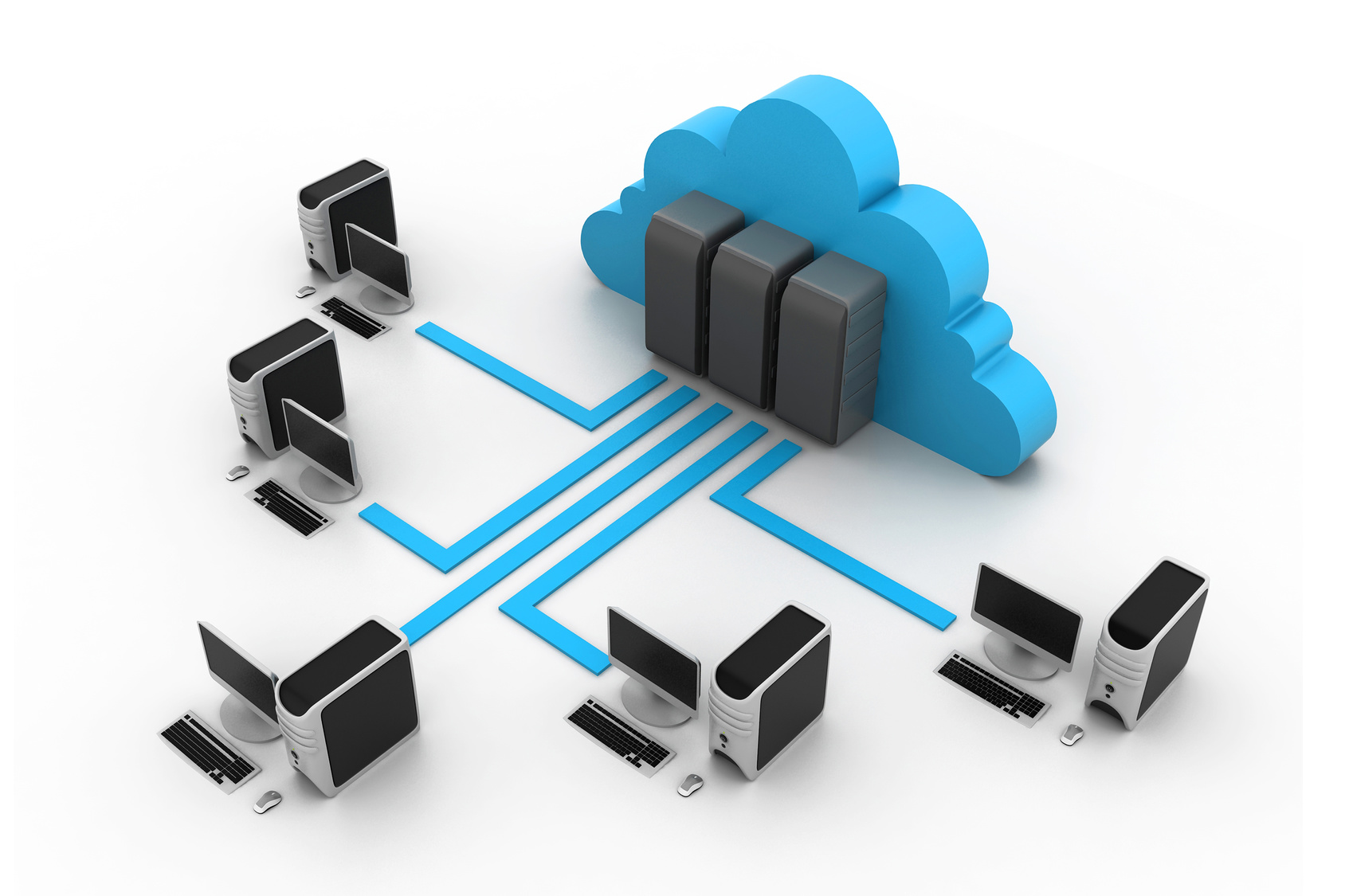
With businesses increasingly turning to cloud computing for factors like sharing resources for big data storage, software and processes, India’s telecom authority has proposed regulating this segment of industry. The paper sought comments on the steps government should adopt to promote cloud computing in e-governance projects, establishment of data centres in India, encourage business and private organisations to utilize cloud services and to boost Digital India and Smart City incentive using cloud. Cloud Computing has four attributes — data intensive, resource pooling, scalability and rapid elasticity and On demand access. It can be operated in one of the four deployment models — public cloud, private cloud, community cloud and hybrid cloud.
Consultation paper mentions of privacy and data protection, potential for forced data localization , the prevention of cross border data transfer and taxation of cloud services .TRAI has also posed questions regarding provisions so that a customer is able to have control over his data while moving in and out of the cloud. The other areas in which it has sought comments include provisions for billing and metering re-verification of cloud services, how disputes are to be addressed, mechanisms for customer complaints and the security aspects of such services. There is an unanswered question on policies, systems and processes required information governance, framework in cloud from legal point of view and most importantly if it is hosted in a different country. There’s a point where the TRAI also points towards the possibility of licensing‘intermediate service providers’, without exactly specifying what kind of entities they are referring to. For a regulator which appeared to be avoiding broad consultations and taking up issues one by one, this is a bit of a disappointment. It’s hard to find an online service today that doesn’t deploy cloud based services, and this consultation thus has the potential to effect every Internet business, and thus availability of services to users in India.
Cloud computing has accounted for about 33 per cent of the total IT expenditure in 2015 across the world. Analysts project that from 2013 to 2018, the cloud computing market will grow at a 9.7 per cent annual rate. Also, by 2019, cloud IT infrastructure spending is expected to be $52 billion, or 45 per cent of total IT infrastructure spending. In India, cloud computing has huge potential for industries. Verticals such as retail, railways, manufacturing, banking, education and healthcare have started switching their on-premise applications to cloud services for optimized reach and performance as well as elasticity and scalability.
Source: Times of India
Video Conferencing in Healthcare to expand with a CAGR of 12.1% from 2015 to 2022

Video Conferencing promises immense opportunities in the healthcare market especially allowing doctors to connect with patients and other parts of the medical staff instantly and easily. According to a new market research report published by Credence Research “Video Conferencing in Healthcare Market – Growth, Share, Opportunities, Competitive Analysis and Forecast 2015 – 2022”, the global healthcare video conferencing market was valued at US$246.0Mn in 2014 and is estimated to expand with a CAGR of 12.1% from 2015 to 2022. The research report shares insight pertaining to the global Video Conferencing in Healthcare market. Video conferencing in Healthcare enables easy medical support within no time and reduces the need for unnecessary hospitalization and travelling. Conferencing solutions are available on premises as well as cloud based. This makes them feasible for both healthcare organizations as well as patients. The most significant factor fueling the market growth is the overall rising shift towards Telemedicine services worldwide. Due to rising advancement and investment in the healthcare IT infrastructure, the healthcare video conferencing market is expected to witness high growth in the coming years.
Healthcare organizations experience advantages such as better patient care, collaboration among the healthcare teams and easy and faster training from video conferencing solutions. The healthcare practitioners and patients can reduce the costs associated with regular office visits. Physicians can be anywhere monitoring and collecting patient. Healthcare industry is also getting support from governments for development of IT infrastructure for betterment of services. Besides doctor-to-patient communication, video conferencing is also allowing hospitals to create networks to provide each other with support and consults. By easily sharing their expertise outside their own institutions, doctors can offer incredible value to their medical colleagues and those colleagues’ patients. As a result; the global healthcare video conferencing market is estimated to register strong growth in the coming years.
Nevertheless, the major factors hindering the market growth are the financial and technological challenges in the market. Additionally low technology awareness and acceptance among the people is another factor contributing to the challenges of the market. The global healthcare video conferencing market is consolidated in nature with few major international players contributing to more than fifty percent of the total market revenue. Some of the major players operating in the market include Polycom, Inc, Cisco Systems, Avaya and Huawei Technologies Co., Ltd. Healthcare video conferencing market is quite nascent as compared to the overall video conferencing industry. Thus, these companies continuously emphasize on development of advanced solutions with minimal price in order to gain a competitive edge in the market.
Indian Telcos are trying hard to regain revenue by recommending regulation for Communication Apps

Indian telecom companies have always been quite vocal about their dislike for over-the-top (OTT) services such as messaging and calling apps as it provides similar services and penetrates into their market, eating into their biggest revenue streams. Telecom companies have made a strong case to TRAI about OTT services hampering revenue and seeking recommendation on regulation of OTT service. It is an undisputed fact that VoIP (voice over internet protocol) service offered by OCSPs (OTT Communication Service Providers) is a substitute for services offered by telecom service providers (TSPs). Telecom companies have been having a hard time trying to increase revenues, especially as SMS usage drops and messaging apps become the norm. Most users do not have to incur extra costs of SMS because of free calling apps, phone calls. This meant that telecom companies started promoting data plans instead of talk time or SMS plans and as a result data adoption and usage has increased. But telecom companies are realising that this change comes at a high cost.
OCSPs offer these services without holding any license in India, which violates the Indian Telegraph Act. The Licensing and Regulatory Regime cannot allow a situation where in the licensed entity is treated at a lower footing than an unlicensed entity. As a matter of fact communication apps offer calling services at far lower rates than carriers – mostly a consumer just pays for the data consumed – thus eating into the telcos’ revenue pie. Voice still accounts for around 80% of a telco’s revenue. Telcos want these apps to pay the same levies such as license fee, spectrum charges etc besides follow rules around security, lawful interception, quality of service. This could mean the apps wouldn’t be able to offer calling and messaging services virtually for free because of the increased costs.
It noted that mobile phone operators realize only around a sixth from a data call made over the communications apps compared to what they realize from a normal voice call. The low data price is furthering the growth of VoIP/Internet Telephony by unlicensed OCSPs at the cost of PSTN voice telephony, thereby reducing TSPs ability to continue with the lower price of data for accessing content over the Internet. Thus OCSPs should be brought within the ambit of Indian regulatory landscape. It is important that TRAIL addresses the issues surrounding termination charges from calls from a communication app to a regular cellular network, but keep in mind the ongoing court cases around the issue of termination charges. Issues such as allocation of a separate number series for internet traffic, security, lawful interception, quality of service needs to be sorted out before termination of internet telephony calls is facilitated in PSTN/PLMN network.
Customer experience software solutions provider Amdocs launched core network testing service for telecom operators.

Customer experience software solutions provider Amdocs has launched core network testing service for telecom operators. It will help to deliver superior customer experience by ensuring high service quality, while reducing total cost of network ownership and accelerating time to market for new services. The new service will address the growing complexity of physical and virtualized networks as well as new network technologies and services such as 4G LTE and VoLTE.
Today service providers are introducing advanced LTE services and transforming to open virtualized networks to improve service agility. Amdocs is planning to take advantage of the growing demand and deploy new network features at an accelerated rate for faster and rigorous testing cycles across complex multivendor physical and virtual networks. Amdocs brings a vendor-neutral approach to core network testing with strong network credentials in orchestration, policy and service control, and analytics, along with extensive experience in RAN and SON testing tools and practices.
The Amdocs Core Network Testing Service provides test scoping and planning, network equipment testing, interoperability testing, pilot testing, network test lab management and device certification for both physical and virtualized network functions (NFV) testing. By utilizing a common Amdocs BEAT framework and methodologies powered by data analytics, Amdocs can unify and automate IT and network testing activities, including operational and business support systems, and now the network packet core. According to recent research conducted by Coleman Parkes for Amdocs, service providers are currently using more than four different vendors on average to conduct network testing to support service introductions. This highlights the need for a holistic approach that will simplify the overall testing process across the LTE packet core and IMS (IP multimedia subsystem) applications such as VoLTE.